
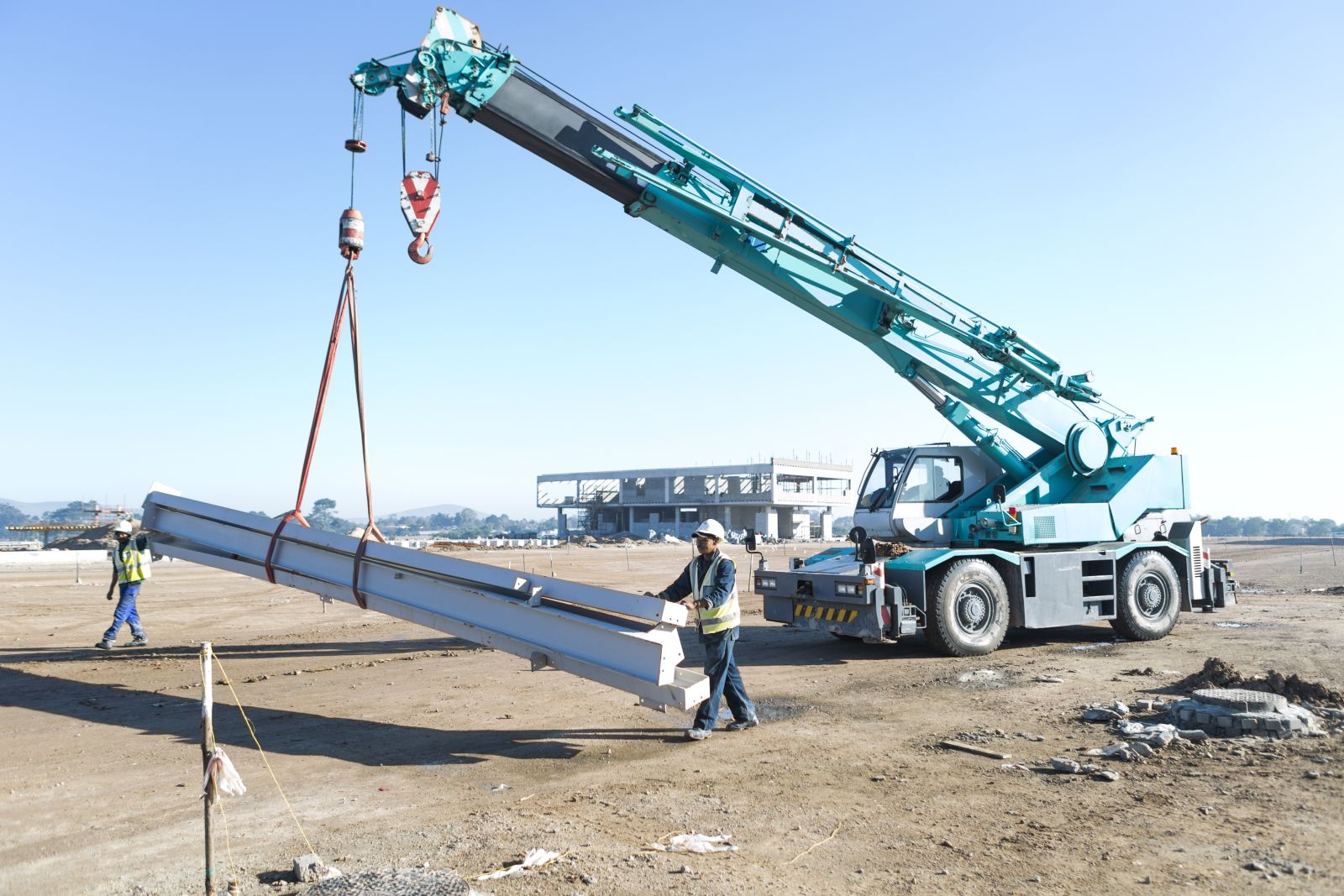
When a crane operator is injured on site, two separate accounts open. The first belongs to the state: Turkey's social security institution (SGK) pays temporary incapacity benefits, covers medical treatment and, where the loss is permanent, awards an income. The second account belongs to the employer — and most businesses discover it only when the court papers arrive. Employer's liability insurance is the policy that takes over that second account: it covers compensation claimed from the employer by an injured employee or their dependants above and beyond social security benefits, together with recourse claims brought against the employer by the social security institution, up to the limits stated in the policy.
This guide walks through the product end to end: the gap between social security and employer liability, the scope of cover, the extensions that must be written into the contract, how to set limits, and what drives the premium — illustrated with real scenarios from the crane, platform and heavy transport world we work in every day.
What is employer's liability insurance?
In one sentence: it is a liability policy that covers, up to the limits written in the policy, the compensation demanded from an employer by employees or their dependants following an occupational accident or disease, as well as recourse claims brought by the social security institution against the employer.
Three characteristics should be clear from the start:
- It is not compulsory, but it is practically unavoidable. No statute forces you to buy it; the legal consequences of a workplace accident do. In lifting, working-at-height and site assembly work, operating without the policy means leaving your balance sheet at the mercy of a single accident.
- It protects the employer, not the employee. This is a liability policy, not an accident policy. Payment goes to the injured worker or their dependants, but the asset being protected is the company's. It should not be confused with personal accident cover, which pays a fixed benefit regardless of fault; employer's liability pays the actual loss in proportion to your share of fault.
- The legal process determines the amount. The figure comes from the court's allocation of fault and its calculation of the loss, not from a tariff. That is why this policy is also the financial partner of your legal defence.
What social security pays, what the employer pays
This is the heart of the guide. "I pay social security contributions, my workers are insured" is true but incomplete. Social security provides defined benefits; the employer's legal liability begins where those benefits end.
Social security typically provides: temporary incapacity benefit, medical treatment and prosthesis costs, permanent incapacity income, income for dependants in fatal cases, and a funeral allowance. These are standard, statutory payments.
What the employer pays is the difference — the gap between the real loss calculated by the court and the portion covered by social security. That gap has three components:
- The shortfall in material damages. The employee's lifetime loss of earnings is calculated actuarially; the capitalised value of the social security income is deducted, and the remaining balance is claimed from the employer.
- Non-pecuniary (moral) damages. Social security pays none. In injury cases the employee, and in fatal cases the spouse, children, parents and — where the conditions are met — siblings, direct their moral damage claims entirely at the employer.
- The institution's recourse claim. Under certain conditions the institution reclaims from the employer what it has paid and will pay. This is a separate file, independent of the employee's own lawsuit.
The practical consequence: one accident can produce two lawsuits against the business — the employee's (or dependants') compensation claim and the institution's recourse claim. For an uninsured company, the sum of those two files can exceed the annual profit of a mid-sized crane operation. For an insured one, both files run on the insurer's desk.
Where the liability comes from
An employer's liability for occupational accidents in Turkey draws on three separate sources, and the policy has to be built with all three in mind.
- The duty of care. The Turkish Code of Obligations requires the employer to take the measures needed to protect the life, health and bodily integrity of employees. The duty arises from the employment contract; breaching it obliges the employer to compensate the resulting loss in proportion to fault.
- Occupational health and safety legislation. Law No. 6331 and its regulations impose concrete obligations: risk assessment, training, personal protective equipment, periodic equipment inspections and health surveillance. Non-compliance triggers both administrative penalties and, more importantly, the finding of fault in a compensation case.
- Social security legislation. Where an accident results from the employer's intent or from acting contrary to occupational health and safety legislation, the institution reclaims the benefits it has paid and will pay from the employer.
One conclusion follows from this structure: there is no faultless accident, only accidents with shared fault. In most files the expert report distributes fault in percentages between employer, employee and any third parties. The employer's share may come out at 100% or at 20% — but rarely at zero, because organising site safety is, by definition, the employer's job.
There is also a time dimension. Claims arising from occupational accidents can surface many years later; lawsuits filed long after the policy period in which the accident occurred are routine in this industry. That makes the basis on which the policy is written — the date of the event or the date of the claim — a technical detail worth settling in the contract rather than in a dispute.
Who needs it?
The short answer: any business with employees on the payroll. But by risk density, some operations sit at the top of the list:
- Crane and lifting companies — operators, riggers, site supervisors; crews working at height and under suspended loads.
- Tower crane operators and site subcontractors — erection and dismantling operations are among the highest-risk jobs in the sector.
- Working-at-height and platform rental firms — boom lifts, scissor lifts, telescopic equipment.
- Transport and logistics companies — drivers, forklift operators, warehouse staff; loading and unloading accidents are extremely common.
- Assembly, steel structure and industrial maintenance contractors — crews working on someone else's site.
- Factories and production facilities — machine-related accident exposure on presses, lathes and conveyors.
The common thread: any work where machinery and people share the same square metre is a natural candidate for this policy. A smaller crew does not mean lower severity — only lower frequency. The compensation burden of a single fatal accident is the same for a five-person business as for a fifty-person one.
What does it cover?
Standard cover responds to the following claims within the employer's legal liability for occupational accidents:
- Legal liabilities arising from accidents occurring at the workplace
- Compensation claims for bodily injury caused by the accident
- Claims above and beyond the benefits provided by social security
- Recourse claims brought against the employer by the social security institution
- Defined legal costs incurred with the insurer's consent
The mechanics are straightforward: the event is first classified as an occupational accident, fault is then allocated, the loss corresponding to the employer's share is calculated, and the insurer pays up to the policy limit. Anything above the limit stays with the business — which is why setting limits is the single most important decision in this policy, and why it has its own section below.
Recourse claims: the invoice that surprises employers
This is the item that catches operators off guard. The sequence is typically as follows: an accident occurs, the institution provides the statutory benefits and, where the loss is permanent, awards an income. It then reviews the file; if the inspection report finds a breach of occupational safety legislation, the institution reclaims the value of what it has paid and will pay from the employer.
Recourse claims are difficult for three reasons:
- The amount is cumulative, not fixed. Because the capitalised value of the awarded income is included, the claim can be many times a one-off payment — and grows further where a young worker suffers permanent incapacity.
- Settling with the employee does not close it. A release signed by your employee does not prevent the institution from pursuing its own claim. The two files run independently.
- The timing is deceptive. The claim may arrive years after the accident. Whether you had a policy then, what limit it carried and on what basis it was written all become critical.
Employer's liability insurance is the only product that brings this claim within cover. Without it, the recourse debt is paid straight out of company cash flow.
Extensions you have to ask for
The general conditions of employer's liability insurance in Turkey leave several situations outside standard cover and allow them to be added by endorsement. For field operations, practically all of them should be treated as mandatory:
- Transport to and from site: accidents occurring while employees are carried collectively to the place of work in a vehicle provided by the employer. Any company running a site shuttle needs this.
- Assignments away from the usual workplace: accidents occurring while an employee is sent elsewhere on duty and is not performing their normal work. Critical for operators moving cranes between cities.
- Accidents outside Turkey: essential for firms taking on assembly or project work abroad.
- Occupational diseases: claims arising from noise, vibration, dust and chemical exposure. A quiet but real exposure, because it builds over years.
- Non-pecuniary (moral) damages: often one of the largest items in fatal and severe injury files; without the endorsement it stays entirely with the business.
These five items are the most frequent cause of the sentence "I had a policy but it didn't pay". If you ask only one question when buying cover, ask this: which of these clauses are explicitly written into my policy?
What is not covered?
- The employer's intent: deliberately caused loss is outside every liability policy.
- Events that do not qualify as occupational accidents: incidents unrelated to work and outside working time.
- People not on the payroll: the policy responds for employees bound by a contract of service; undeclared workers and subcontractor personnel fall outside it (see the section below).
- Administrative fines and criminal sanctions: penalties for regulatory breaches cannot be insured.
- Anything not added by endorsement: occupational disease, moral damages, shuttle accidents, incidents abroad — if it is not written in the policy, it does not exist.
- War, civil commotion, nuclear risks and similar extraordinary events: the common exclusion of all policies.
Whether an event caused by a natural disaster qualifies as an occupational accident, and whether it falls within cover, depends on the specific facts; for borderline situations the definitions in the policy wording should be read in advance rather than after a loss.
Three scenarios from the field
Scenario 1 — A rigger's hand injury. During a lift the load swings suddenly; the rigger's hand is crushed between two loads and he loses a finger. Social security covers treatment and a permanent incapacity rating is assigned. The employee sues for material and moral damages for the residual loss of earning capacity. The expert report attributes the greater share of fault to the employer because there was no lift plan and no banksman was assigned. The portion of material damages exceeding the social security income, plus the moral damages, are met by the policy — provided the moral damages endorsement was purchased.
Scenario 2 — A fall from a platform. A maintenance technician working from a boom lift falls because he had not clipped on his harness. The file finds fault on the employee's side; but the report also records that the employer's supervision was incomplete and the training records were missing. Fault is apportioned, and the compensation calculated on the employer's share is paid under the policy. The lesson is clear: an employee's fault reduces the employer's liability, it does not eliminate it.
Scenario 3 — A road accident during an out-of-town mobilisation. An operator moving a crane to another province is involved in a traffic accident. Because the event occurred while he was on duty but not performing his normal work, it falls outside standard cover; it is included only if the relevant endorsement is in the policy. The vehicle's motor policies are in play in the same file — which loss is met by which policy should be mapped in advance.
How compensation is calculated
Understanding how the figure is built turns limit selection from guesswork into arithmetic. Courts calculate material damages actuarially, using these inputs:
- The employee's earnings: the wage at the date of the accident. Even where a lower figure was declared, the court investigates the actual wage.
- Age and active working life: a younger worker has a longer earning horizon and therefore produces a higher award. A passive period after active working life is also taken into account.
- Degree of incapacity: the permanent loss percentage established by medical board report.
- Allocation of fault: the percentages assigned to employer, employee and third parties are applied directly to the calculated loss.
- Mortality tables and technical interest: the calculation is discounted to present value using current life tables and a low technical interest rate. The low rate is one of the technical reasons awards run high.
- The social security offset: the capitalised value of the awarded income is deducted from the calculated loss; the balance is claimed from the employer.
Moral damages are not formula-driven; the judge sets them at discretion, weighing the severity of the event, the parties' financial circumstances and the degree of fault. In fatal accidents, several dependants can each claim separately, which raises the total quickly.
The practical lesson: the cost of an occupational accident file is measured less by "how serious was the accident" than by "who was injured, how old were they, what did they earn, and how many dependants stand behind them".
How to choose your limits
Policies normally carry three limits together:
- Per person — the maximum payable for a single employee.
- Per accident — the ceiling where several employees are affected by the same event.
- Annual aggregate — the maximum payable over the policy period.
Three rules of thumb:
- Set limits against the worst case, not the average. The measure is not "what happened last year" but "what would the file cost if my youngest, highest-paid operator were permanently incapacitated".
- Build the per-accident limit around crew size. In lifting and assembly work accidents are rarely single-casualty: operator, rigger and ground crew can be affected in the same operation. The per-accident limit should be a multiple of the per-person limit.
- Budget for moral damages. In fatal accidents dependants' moral claims form a substantial item alongside material damages; a limit set purely on material loss will fall short.
The common mistake is keeping limits low to keep the premium down. In this product the premium is relatively insensitive to the limit: raising it meaningfully does not raise the premium proportionally. A high limit is the cheapest safety margin this policy offers.
Subcontractors, hired operators, temporary staff
This is the most confused area in the field. Three situations should be kept apart:
- Subcontractor personnel. As a rule your policy protects the people on your own payroll. However, the principal employer can be held jointly liable towards a subcontractor's employees in certain circumstances. Requiring the subcontractor's own employer's liability policy in the contract — and filing a copy of it — should be standard practice.
- Operated equipment rental. If the operator is on your payroll, that operator's accident is your policy's business, whichever site the machine is working on. The hirer's policy does not cover your employee.
- Temporary and seasonal staff. Short-term staff taken on in busy periods are covered as long as they are on the payroll — but the declared headcount must be kept current through the policy period. Working with more people than declared invites an underinsurance argument at claim time.
The general principle: liability follows the payroll. Every uncertain situation should be settled in writing when the policy is placed — ambiguities left to be interpreted on the day of a loss tend to resolve against the business.
Your safety file is half your policy
In no other product is the link between insurance and occupational safety this tight. The reason is simple: the level of compliance with safety legislation drives both the allocation of fault and the institution's right of recourse. The following records are the ones most often requested in a claim file:
- Risk assessment — current and specific to the work actually performed; generic documents are of little use in a file.
- Safety training records — with signed attendance lists.
- Operator certificates — valid credentials for crane, forklift and platform operators.
- Periodic inspection reports — for cranes, slings, ropes, platforms and lifting accessories, carried out by authorised personnel.
- PPE issue records — helmets, harnesses and protective equipment handed over against signature.
- Health surveillance records — pre-employment and periodic medical examinations.
This file works in both directions: before an accident it reduces fault, after one it keeps the defence standing. It has the same effect on the insurer's view — a business with orderly records lands in a better risk class and gets a better price.
Where it ends and other policies begin
Full protection for a site operation comes from several policies working together. The boundaries are drawn like this:
- Employer's liability → injury to your own employees.
- Third party liability → injury and property damage to third parties around you. Your employee is not a third party — the most frequently confused point of all.
- Crane hook liability → damage to the load on the hook.
- Machinery breakdown → damage to the machine itself.
- Personal accident → a fixed benefit paid to the employee regardless of fault; it complements a liability policy rather than replacing it.
A single event can trigger several of these at once: an overturning crane damages itself (machinery breakdown), strikes the building next door (third party), drops the load on its hook (hook liability) and injures the rigger (employer's liability). Four files, one accident. Aligning the limits and exclusions of those policies so that one picks up where another stops is the real craft of your broker.
What drives the premium?
- Headcount — the basic scale of the cover.
- Risk class of the work — working at height, lifting operations and site work are rated distinctly higher than office work.
- Annual gross payroll — a direct input to the compensation calculation, and therefore to the premium.
- The limits selected — per person, per accident and annual aggregate.
- Extensions — occupational disease, moral damages, shuttle transport, cover abroad.
- Claims history — past accident records and their outcomes.
- Safety maturity — the share of certified operators, the discipline of periodic inspections, the state of training records.
To give a sense of scale: the annual premium for this policy is a small fraction of the cost of a single serious accident file. What really moves the price in this market is not negotiation but a well-prepared submission — a business that presents its equipment list, operator certificates and safety records properly buys the same cover noticeably cheaper.
One warning: the cheapest quote in this class is usually the one with the extensions stripped out. When comparing offers, compare the clause-by-clause list of cover, not the premium.
What to do when an accident happens
- People first: intervention, first aid and emergency medical care.
- Preserve the scene: once the area is safe, photograph it without moving anything; keep the equipment and connecting components.
- Make the statutory notifications: occupational accident notifications must be filed within the periods set by legislation; delay produces both penalties and an unfavourable reading of the file.
- Record and witnesses: have an incident report drawn up, secure the witness list and any camera footage.
- Assemble the documents: training records, PPE receipts, operator certificates, periodic inspection reports, risk assessment — the backbone of the file.
- Notify your insurer immediately: do not wait for a lawsuit. An insurer informed early shapes the defence from the outset.
- Avoid statements that amount to an admission of liability: support the family and the employee, but leave the assessment of fault and compensation to the legal process.
If you are a Fidancılar client, your first call after an accident comes to us: we manage the file from the notification timetable through to coordinating the defence. In this policy the experience of the claims service is worth as much as the cover itself, because the process is a legal one that unfolds over years.
The 5 most common mistakes
- Assuming social security contributions are enough. The gap between what social security pays and what a court calculates is the entire reason this policy exists.
- Skipping the extensions. Occupational disease, moral damages, shuttle accidents and cover abroad do not exist unless written into the policy — and they are usually the most expensive items in a file.
- Setting limits too low. A permanent incapacity file for a young, well-paid employee easily exceeds a modest limit; the excess comes out of company funds.
- Leaving the subcontractor chain open. Not requiring a policy from your subcontractor moves the principal employer's liability straight onto your business.
- Not updating headcount and payroll declarations. A crew that grows during the policy period and is not declared invites an underinsurance dispute at claim time.
A checklist before you sign
- What are the per-person, per-accident and aggregate limits? Do they meet the worst case?
- Are moral damages explicitly covered?
- Is occupational disease cover included?
- Are shuttle accidents and duty assignments away from the workplace within scope?
- If you work abroad, has cover outside Turkey been added?
- On what basis is the policy written — date of event or date of claim? Is there provision for claims relating to earlier periods?
- How are subcontractors and temporary staff defined in the contract?
- Are legal defence costs within cover?
- Are the boundaries consistent with your third party, hook liability and machinery policies — is any gap left between them?
- Does the claims service have experience with occupational accident files?
Every item on this list is the lesson of a real file. Ten minutes spent asking these questions at the quotation stage saves years — and substantial sums — at the litigation stage.
For crane and site operations, employer's liability insurance is not an optional line item but a natural cost of the work. Send us your headcount, the lines of work you run and your existing policies through our quote form and we will build the cover around the reality of your site. For a product summary, see our employer's liability insurance page.