
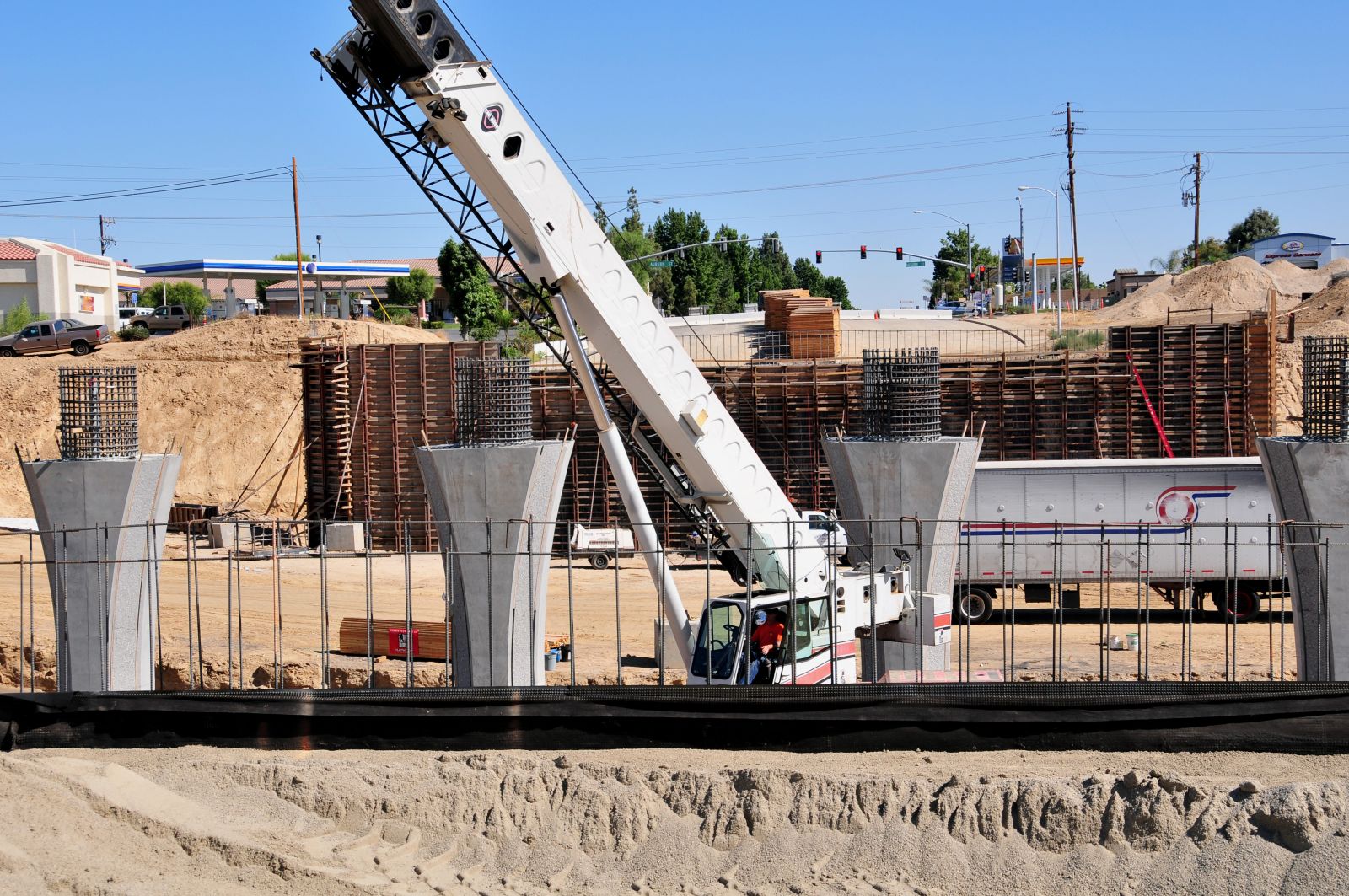
Your machines are the heart of your business — and like every heart, they pick the worst possible moment to falter. Machinery breakdown insurance pays the repair costs of sudden and unforeseen damage to your cranes, forklifts, platforms and other plant. In this guide we translate the policy's legal framework into plain language, with examples from the field — so that you understand your policy on signing day, not on claim day.
What is machinery breakdown insurance?
In one sentence: it is comprehensive cover for the machine itself. It protects machinery that has passed its commissioning tests and works normally, against sudden and unforeseen physical damage — while operating, while at rest, and while being cleaned, overhauled or moved within the same premises. What gets paid is the cost of returning the machine to its pre-loss working condition: parts, labour and, where agreed, connected costs such as dismantling and transport.
The unit of cover is the machine: whatever is listed in the policy is protected, and nothing else — which is why a complete, current machine schedule is the foundation of the policy.
Who is it for? Anyone who owns machines — but above all, businesses whose machines earn the revenue. When a crane operator's machine stops, the repair invoice is only the beginning: work is lost, contract penalties tick, customers wait. The breakdown policy takes over the first link of that chain — the repair cost — and gives the business room to breathe.
A common question frames the boundary well: "I have motor insurance for the crane — why do I need this?" Motor policies deal with the machine's identity as a road vehicle; not with its identity as working plant. The boom, the ropes, the hydraulics and everything that happens during operation belong to the machinery breakdown world, not to motor cover. The two policies are not alternatives; they insure two different lives of the same machine.
A short history: from steam boilers to cranes
Machinery insurance is a child of the industrial revolution. In 19th-century Britain the heart of every factory was the steam boiler — and boilers occasionally exploded. First came engineering associations that inspected boilers regularly; then those associations began to guarantee the boilers they inspected. Machinery insurance was thus born intertwined with engineering: measure the risk, prevent what can be prevented, insure the remainder.
With electrification the cover spread to turbines, generators and motors; with industrialisation, to machine tools and mobile plant. Today everything from a tower crane to a CNC centre can shelter under this umbrella. The founding idea is still visible: a good machinery insurer looks first at the machine's maintenance regime — because this class of insurance was never designed to replace maintenance, only to stand beside it.
For our industry the lesson is direct: cranes and lifting machinery are among the most engineering-intensive corners of the class. Load charts, boom configurations, ground pressures and periodic inspections are part of both safe operation and correct insurance. Buying this cover from someone who does not know your machine is like taking a prescription from a doctor who never examined you — the right first question is not "how much?" but "who understands my machine, and how well?"
The heart of the cover: sudden and unforeseen
The entire framework turns on two words: sudden and unforeseen. The cover responds to events that appear at once and could not be anticipated — not to problems that develop slowly over time.
One example makes the line concrete. If the crane's hydraulic pump seizes in an instant because a foreign particle entered the circuit, that is sudden and unforeseen — covered. If the same pump fails because years of skipped oil changes wore its bearings to the end of their life, that is a gradual result — caught by the wear-and-tear exclusion. The invoice may be identical in both cases; the fate of the claim is not.
All three states of the machine matter: sudden damage is covered while the machine is working, while it is at rest, and while it is being cleaned, overhauled or moved within the premises. "The machine wasn't even running" is not a valid objection in this class — racking collapsing onto a parked crane is just as much a claim as a failure mid-lift. The cover looks at the nature of the damage, not at what the machine happened to be doing.
What does it cover?
The covered-causes list is long; these are the headings that matter most in the field, in plain words:
- Operator and personnel error: wrong manoeuvre, faulty use, momentary carelessness. The largest single source of claims in our industry — and the most valuable line in the policy, because even experienced operators make mistakes.
- Electrical effects: short circuit, voltage fluctuation, insulation failure — increasingly important in machines full of electronic control units.
- Lubrication failure: damage from the sudden interruption of lubrication (not from chronic neglect).
- Mechanical events: centrifugal disintegration, water hammer, sudden overload — failures born of the machine's own dynamics.
- External events: impact, overturning and other named external causes — extendable under the policy's special conditions.
One point is critical: the list does not mean "every failure is paid". The precondition of payment is tracing the failure to a sudden cause of the listed kind. The surveyor's first question in every file is the same: "What caused this, and was it sudden?" Businesses with proper maintenance records answer that question easily.
A frequent boundary question: must the damage come from inside the machine or outside? Both can qualify. Internal failures are the classic territory; sudden external events enter the cover according to the policy build. What matters is which external events are expressly written into your policy — for cranes and platforms working in the open, the status of storm, flood and ground movement must be clarified at quotation stage, as some of these may need an extension.
What is not covered?
- Wear, tear and gradual deterioration: every machine's natural ageing is uninsurable — insurance is risk transfer, not a maintenance budget.
- Defects under manufacturer's warranty: a manufacturing fault is the maker's invoice; the policy does not stand in for the warranty.
- Fire and theft: these belong to the fire policy; breakdown and fire cover complement each other, and both are needed.
- Wilful misconduct: deliberate damage is uninsurable everywhere.
- Machines still in erection or testing: plant whose commissioning is not complete belongs to erection insurance, not to this policy.
- Consequential losses: the work lost while the machine stands idle, penalties paid — outside standard cover; business interruption can be added separately.
The logic of the exclusions is consistent: this is accident insurance, not destiny insurance. Losses that belong to time, to neglect or to other policies are kept outside.
Crane, forklift and platform examples
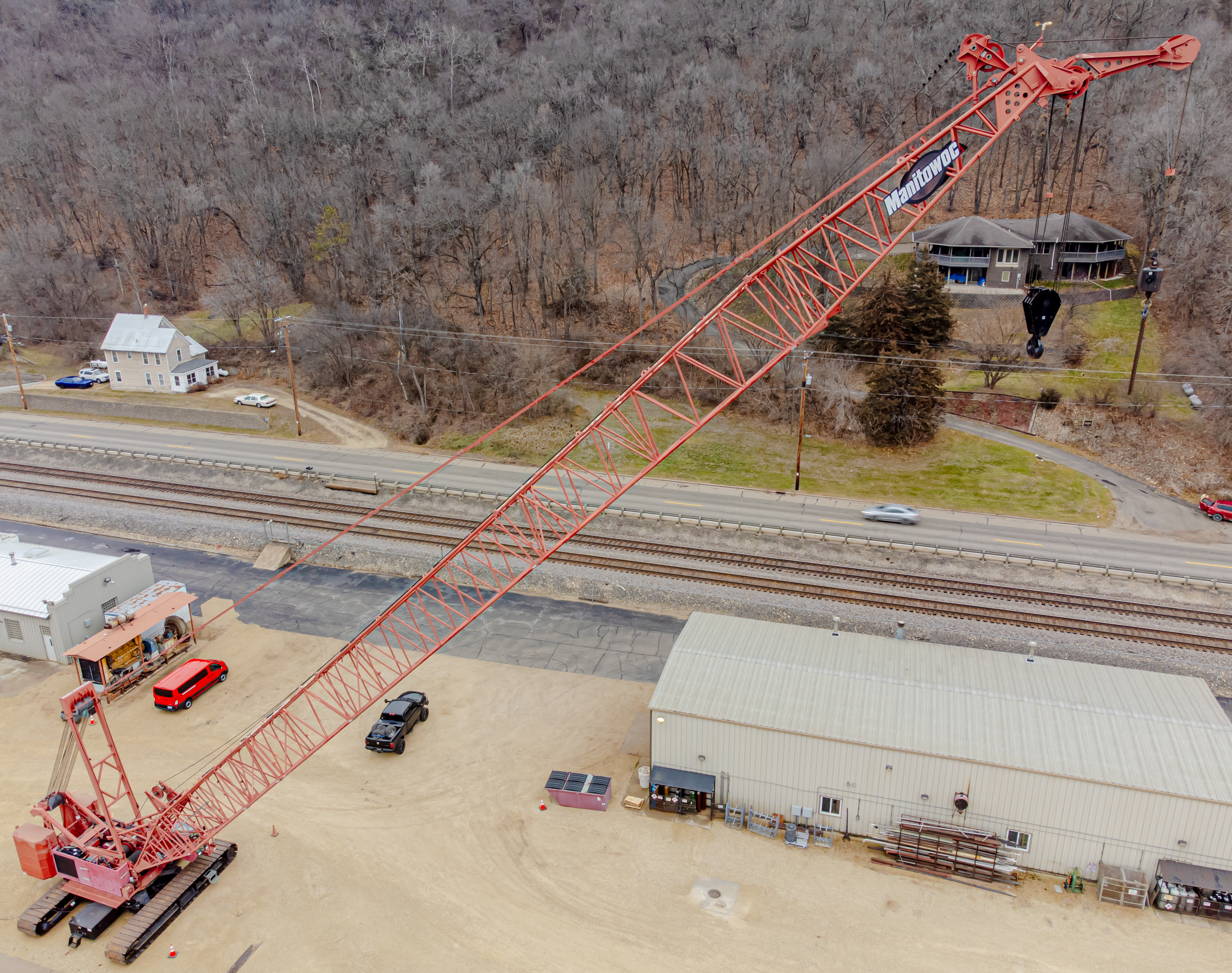
Mobile crane — boom damage: a sudden load shift during a lift twists a boom section. Sudden, unforeseen, external: covered. The repair includes section replacement, alignment and testing. Had the same boom cracked through years of accumulating fatigue, the "gradual damage" debate would open — and regular non-destructive testing records would be the operator's strongest card.
Forklift — electrical failure: a voltage spike during charging burns the control board. Covered under electrical effects. The board may sound cheap; modern electronic units and their lead times are full of surprises — one more reason to keep the sum insured current.
Boom lift — overturning: ground failure tips the platform; chassis and boom are damaged. Sudden external event: covered. In the same accident, damage to the surroundings belongs to third party liability and the operator's injury to employer's liability — a clean example of how three policies split one accident.
Useful extensions
- Mobile plant extension: the standard cover is tied to "the same premises"; for cranes and platforms that travel from site to site, the cover must be written to follow the machine across all work sites and its movement within them. Road transport between sites belongs to cargo insurance — draw the boundary between the two policies in advance.
- Overtime and express freight: the extra costs of getting the machine back up fast — night work, air-freighting parts — are paid only with this extension.
- Business interruption: the revenue lost while the machine stands — addable as separate cover, and especially valuable for single-machine businesses.
- Debris removal: clearing and preparing the site after a major loss.
Rented and operated machines
Rental is the daily reality of our industry — and it complicates the question of who insures. Three basic scenarios:
- Your machine, your operation: the simple case; you buy the policy, you are the insured.
- Operated rental (machine + your operator): control stays with you, so the breakdown policy should stay with you too. Writing "hirer is liable for damage" into the rental contract is not a substitute for insurance — the hirer's ability to pay is less certain than your policy.
- Bare rental: the machine works in hands outside your control. Either have your policy expressly cover bare rental, or require the hirer to insure and to evidence it in your favour. Owners who fail to disclose bare rental to their insurer walk into one of the most common cover gaps in the class.
And a symmetric warning for hirers: if the rental contract makes you liable for damage to the machine, does that liability have a home in your insurance programme? The "care, custody and control" exclusion lives exactly here — your rental model must be explained to the broker on both sides of the contract.
The sum insured: the most critical technicality
In machinery breakdown the sum insured is set at the machine's current new replacement value — not its second-hand market price. It sounds wrong at first: "why insure my ten-year-old crane at the price of a new one?" The answer lies in partial-loss arithmetic: parts and labour in a repair are invoiced at new prices. If the sum insured sits below new value, the underinsurance rule applies and every claim is scaled down in the same proportion.
A concrete example: a crane whose new equivalent costs 10 million, insured for 5 million, suffers a 400,000 boom repair — the indemnity halves to 200,000. Cutting the sum insured to save premium is agreeing in advance to have every partial loss half-paid; and the great majority of machinery losses are partial. In periods of fast price movement, reviewing the sum insured annually is the single most important piece of policy maintenance.
Total losses run on different arithmetic: where the machine is beyond economic repair, the indemnity is assessed with regard to its actual value at the time of loss, less salvage. The "insure at new value" rule exists for partial-loss mathematics — a ten-year-old machine does not fetch new-machine money in a total loss. Knowing this distinction up front keeps expectations honest and the sum insured balanced.
Maintenance and insurance: two arms of one system
- Maintenance is a precondition of cover: the policy expects the machine kept in maintained working order. Systematic neglect both triggers the gradual-damage exclusion and puts the insured's duty of care in question.
- Maintenance records are the claim's insurance: the strongest answer to "was this sudden?" is a properly kept maintenance log. Operators who keep periodic service records, oil analyses and NDT reports sit down at the surveyor's table with a strong hand.
- Maintenance lowers the premium: a documented regime shrinks the risk in the insurer's eyes and shows in the price. And its real return is independent of insurance: the loss that never happens beats the best-paid claim.
Maintenance and insurance are not competing costs; they are the two arms of one risk management system — one shrinks the probability, the other carries the financial consequence of what remains.
What drives the premium?
- Type, age and value of the machine: the premium is a small per-mille rate on the sum insured, with the rate varying by machine type.
- Usage profile: one light shift and three heavy shifts do not price the same.
- Maintenance regime: documented periodic maintenance works for you in both price and claims.
- Deductible: per-machine, per-loss deductibles are standard; higher deductibles cut the premium.
- Claims history and fleet size: a clean record and a consolidated fleet policy are negotiating power.
On deductibles, a practical rule: machines that produce frequent small electronic faults are better held at low deductibles; rough mechanical plant that fails rarely but expensively usually earns its keep at high deductibles and lower premium. And for multi-machine businesses, a fleet policy is worth its weight: one policy, one renewal date, a price advantage on the combined sum insured, and machines added or removed by simple endorsement. Managing five machines on five policies is expensive and error-prone — one of the renewal dates always gets forgotten.
A broker's note: machinery breakdown is a class where insurers price the unknown expensively. A tidy dossier — machine schedule, maintenance regime, operator certificates — returns visibly better terms from the very same insurer.
What to do when a machine breaks
- Do not enlarge the loss: stop forcing the failed machine; taking reasonable measures to prevent the damage growing is the insured's duty.
- Photograph and record: document the damaged part, the machine and the scene before intervening.
- Notify immediately: within the policy deadlines; do not begin permanent repairs before the surveyor is appointed (temporary measures are fine).
- Keep the damaged parts: replaced components must not be discarded until the surveyor has seen them — they are the primary evidence of cause.
- Prepare the documents: maintenance logs, operator certificates, any incident report and repair quotations form the skeleton of the file.
Set the timeline expectation correctly too: with a complete file, small and medium claims usually settle within weeks. On large losses — boom replacement, chassis repair — what stretches the clock is usually not the insurer but part lead times, which for imported components can run to months. That fact feeds two policy decisions at once: the express freight extension (pays the difference for air-freighting the part) and business interruption cover (carries the revenue loss of the wait). For single-machine businesses we recommend weighing the two together.
If Fidancılar is your broker, we run the process: surveyor coordination, file management and collection of the indemnity included.
What does the surveyor look for?
The key figure of the claim is the surveyor — an independent expert who establishes cause and quantum. The questions are predictable; preparing the answers in advance halves the timeline:
- What caused the damage — and was it sudden? Kept parts, witnesses and records answer this.
- Was the machine maintained? Service logs and periodic inspection reports are requested.
- Was the operator qualified? Certificates and shift records — standard parts of the file in operator-error claims.
- Is the repair cost realistic? Part prices, labour and repair alternatives are assessed; several quotations speed things up.
- Is the sum insured adequate? The underinsurance check runs in every file — keep the sum current and lose no points here.
Seeing the surveyor as "the insurer's man" is common and wrong; the surveyor is a fact-finder, and a well-prepared file speeds your indemnity exactly as much as it eases their work.
The 5 most common mistakes
- Setting the sum insured at second-hand value. Underinsurance automatically scales down every partial claim — the number one claims dispute of the class.
- Keeping no maintenance records. In the "sudden or neglect?" debate, the operator without records is always the weak side.
- Tying the policy to one address. Without the mobile plant extension, the policy stays home while the machine goes to site.
- Starting repairs before the surveyor. The loss whose cause cannot be established is the hardest loss to get paid.
- Leaving boundaries with fire, cargo and liability policies unmapped. Decide in advance which policy answers which loss, or fall between them on claim day.
A checklist before you sign
Come to the table with four things: a current machine schedule (make, model, year, serial), each machine's new replacement value, a summary of your maintenance regime, and your recent claims record. Then demand clear answers to these:
- Does the sum insured equal current new replacement value — and is it up to date?
- Is the mobile plant extension included? Are all work sites covered?
- What is the per-machine deductible, and how is it applied?
- Are overtime, express freight and debris removal extensions needed?
- Has business interruption been discussed?
- Are boundaries with fire, cargo and liability policies clear?
- Are the claim notification deadline and procedure defined?
As a brokerage serving the crane and heavy lifting industry since 2007, we build machinery programmes knowing where this class's disputes actually happen. Send your machine schedule through our quote form and let us work through valuation, extensions and deductibles together. For product details, see our machinery breakdown insurance page.