
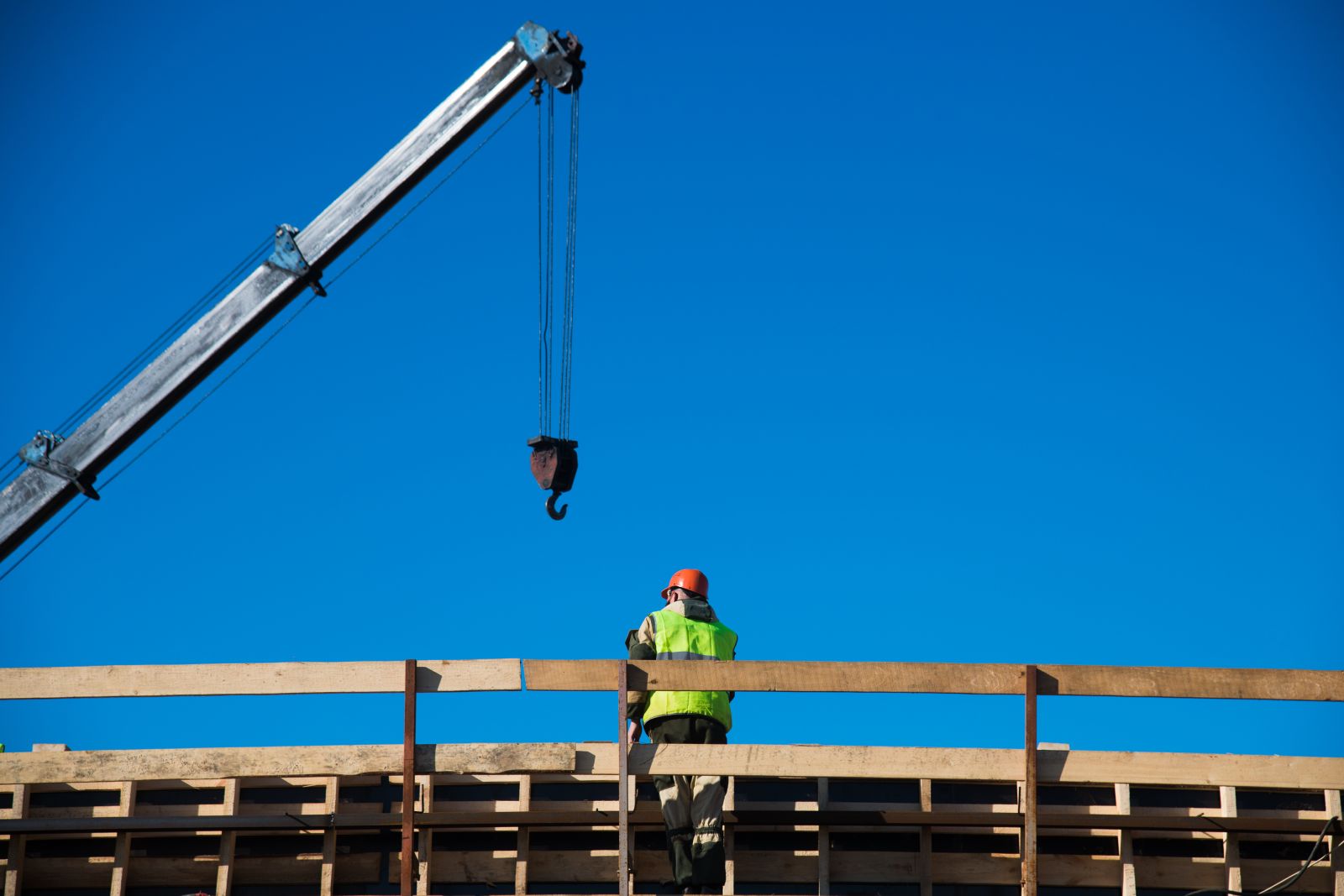
Every machine working on a site carries a responsibility towards its surroundings. A crane can overturn, a boom can touch a neighbouring building, a swinging load can damage parked cars — and the injured third party will address the compensation claim to your business. Third party liability insurance takes over your legal liability for bodily injury and property damage caused to third parties during your operations, up to the limits written in the policy. In this guide we walk through the cover, the choice of limits, the exclusions and the pricing — with real scenarios from the crane and heavy equipment world we serve every day.
What is third party liability insurance?
The basic rule of liability law is simple: whoever causes damage to another, compensates it. For a business this rule means every operation carries an invisible balance-sheet risk — because the injured "third party" (anyone without a contract with you: a passer-by, the owner of the neighbouring building, the driver of a parked car, another company's employee) will direct the claim straight at you.
Third party liability insurance takes that claim over: it covers your legal liability for death, injury or impaired health of third parties and for damage to third-party property, up to the limits stated in the policy. Cover applies at your places of business activity within the policy's territorial scope.
The critical phrase is "up to the limits": the policy is not an unlimited shield. Choosing the right limit is the single most strategic decision in this class of insurance — we will come back to it in detail. One more framing worth keeping in mind: this policy does not protect your own property; it protects your company's balance sheet. What gets paid out is compensation; what gets protected is the existence of the business.
Who needs it?
On paper, any business can buy it; in practice, for some industries it is indispensable:
- Crane operators: mobile cranes, tower cranes and truck-mounted cranes work at height, on crowded sites, surrounded by third parties.
- Platform operators: boom lifts and scissor lifts spend much of their life on streets, next to pedestrian traffic.
- Heavy transport and logistics companies: everything along an oversize convoy's route — bridges, underpasses, power lines — is third-party property.
- Any contractor working on site: from excavation to erection, the neighbouring plots and surrounding structures are always in the risk zone.
The common denominator: the more powerful your machine, the greater the damage it can do to its surroundings. A truck lifting half a tonne and a crane lifting five hundred tonnes cannot share the same liability profile — and should not share the same policy.
A note on scale: this insurance is not just for large fleets. A single-machine operator's liability risk is no smaller than a fleet owner's — if anything, one large loss is more likely to finish a small business that has no reserves. The premium scales down with the size of the business; the risk does not. When a new operator enters the industry, this is one of the two policies we recommend from day one (the other being hook liability).
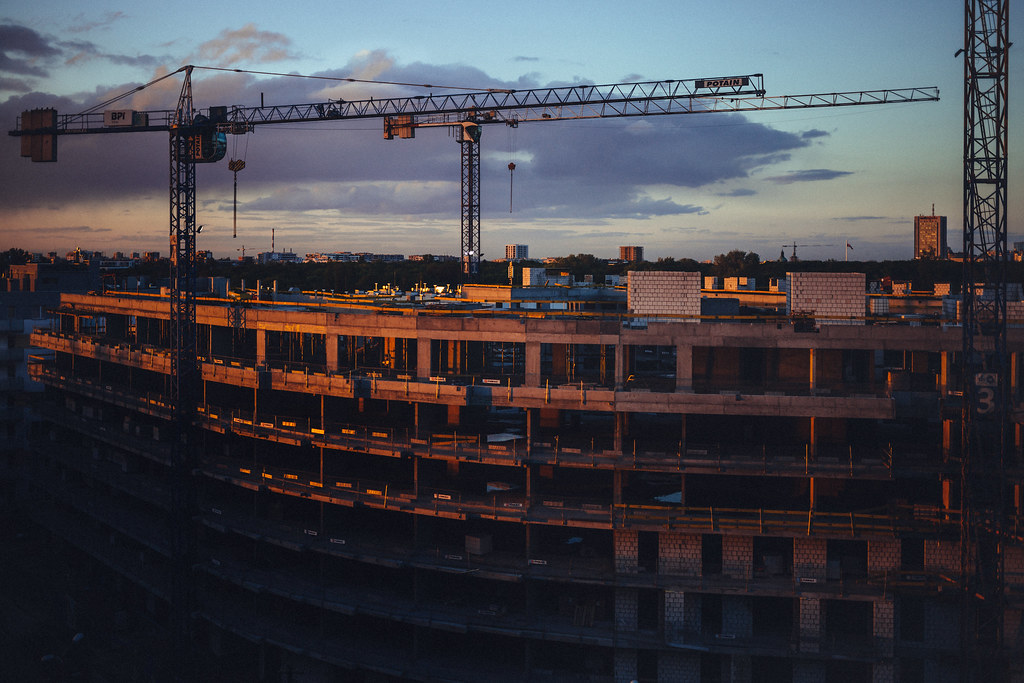
Why it matters — a crane industry example
A mobile crane is installing rooftop air-conditioning units in a city centre. The outrigger load calculation is correct and the operator is experienced; but an old sewer culvert under the pavement collapses, and the crane tips. The boom lands on the facade of the adjacent building: cladding, three balconies and two parked cars are damaged. By sheer luck, nobody is hurt.
Now the invoice: facade repairs, a structural survey of the building, two vehicles, temporary accommodation for the residents, and legal fees. The total easily exceeds the crane's annual revenue. For an uninsured operator this usually means insolvency or years of debt; for an insured one, it is a manageable claim file.
This is not a hypothetical — files like this occur in the industry every year. The nature of the work means the accident risk can never be reduced to zero. What can be reduced to zero is the chance that one accident ends the company.
There is also a quieter dimension: a liability loss is a relational loss. Across the table is not an insurance company but an injured, angry and justified third party — often a neighbour, a business or a public authority you will keep working around. Handling the compensation professionally, quickly and without a feud protects your standing in that market. What the policy provides is not only money; it is an institutional mechanism between the parties: a surveyor establishes the facts, the insurer negotiates, the indemnity is paid on rules. In an industry where work is won by reputation, being "the firm that paid its claim properly" is a commercial asset in itself.
What does it cover?
A standard third party liability policy responds to two groups of loss:
- Bodily injury: claims arising from the death, injury or impaired health of third parties — including treatment costs, loss of earning capacity and loss-of-support compensation.
- Property damage: claims for damage to third-party property — buildings, vehicles, infrastructure, equipment.
In addition, policies typically cover reasonable defence and legal costs incurred against a claim, within the limit — in large files this item alone is substantial.
The geographical and operational scope is defined in the policy. For crane operators whose site addresses change constantly, the policy must be written to cover all temporary work sites — a policy tied to a single address is dead on arrival for a travelling machine.
How the policy works in practice
A liability policy is not triggered the way a property policy is ("I had a loss, please pay"). The sequence has four steps:
- The incident occurs and is notified: you report the event to your insurer within the policy deadlines, with full documentation — even before any claim has arrived, every incident that could lead to one must be notified.
- The claim arrives: the injured party presents a written demand or files suit. Defence strategy is set together with the insurer; the policy carries the legal costs.
- Fault and quantum are established: through survey, expert examination and, where necessary, the courts. Where you are not fully at fault, the compensation follows your share of fault.
- The indemnity is paid: the final amount is paid, within the limit, directly to the injured party. Anything above the limit stays with the business — which is why limit selection matters so much.
Throughout the process the insured has two core duties: provide accurate, timely information; and never admit liability or promise payment without the insurer's consent. Files that respect these two rules settle faster and better, without exception.
How to choose your limits
The limit is the maximum the policy will pay, and it is the most important decision you will make. The right limit comes from three questions:
- What is your worst realistic scenario? For a 200-tonne crane in a city centre, "the boom hit the building"; for a forklift in a rural yard, "vehicle damage". The limit is chosen against your worst day, not against an industry average.
- What do your contracts demand? Tender specifications and corporate principals routinely impose minimum liability limits. If your limit is below the specification, you cannot bid — the policy is part of your sales toolkit.
- How are bodily and property limits split? Limits are usually set separately: per person, per occurrence for bodily injury, per occurrence for property damage. Bodily injury awards have risen sharply in recent years; the "habitual" limits of old policies often trail today's court decisions.
Our practical advice: weigh the limit against the premium difference. Doubling the limit does not double the premium — the gap is usually surprisingly small. The cost of "we should have bought the higher limit", said on claim day, is unrecoverable.
A worked line of reasoning: take a 100-tonne mobile crane working in a city. The worst realistic scenario is boom contact with an adjacent structure, or a load falling into a busy area. In such an event, building repairs, vehicle damage and one serious injury can occur together; the bodily component alone (treatment, incapacity, loss of support) reaches substantial sums in current court practice. A per-occurrence limit chosen "out of habit" is a policy on paper and an open risk in reality. The same crane working on unmanned rural sites would have an entirely different profile — and a different sensible limit. The limit conversation is not a price conversation; it is a scenario conversation.
What is not covered?
Knowing the exclusions is as important as knowing the cover. Typical exclusions:
- Injuries to your own employees: your operator and site crew are not third parties; their occupational accidents belong to employer's liability insurance.
- Damage to the load on the hook: even where the lifted goods belong to a third party, most liability wordings exclude the load itself. That gap is closed by crane hook liability insurance — more below.
- Damage to your own machine: the crane's own damage is the province of machinery breakdown insurance.
- Wilful misconduct and gross fault: deliberately caused damage is uninsurable everywhere.
- Contractually assumed liabilities: obligations you take on by contract beyond what the law imposes are excluded unless specifically agreed.
- Motor traffic risks: the crane's journey on public roads belongs to motor policies; the liability policy covers the operation on site.
Exclusions vary between wordings, and several can be bought back by endorsement. The right approach is to walk through the exclusion list item by item with a broker who understands your operation.
Useful policy extensions
The standard cover does not fit every operation; policies are extended with endorsements. The ones most often needed in crane and heavy lifting work:
- Non-material damage claims: in bodily injury cases the claimant usually adds a non-material (pain and suffering) claim; it must be named in the policy to be covered.
- Underground services: every operation that sets outriggers, digs or loads the ground threatens buried water, power, gas and fibre lines. Utility strikes are expensive and involve public authorities — for machines working in the field this extension is close to mandatory.
- Sudden and accidental pollution: hydraulic oil leaks and fuel spills; clean-up costs and claims. Gradual pollution is uninsurable, but the sudden-event extension is available.
- Tenant's and neighbour liability: fire damage to a rented depot, yard or workshop and to the neighbours.
- Territorial extension: for operators taking cross-border projects, the standard domestic scope can be widened.
Each endorsement carries a small premium; which ones you actually need can only be judged by someone who has listened to your operation. The weakness of "package" policies is exactly this: they dress everyone in an average that fits no one.
Three scenarios from the field
Scenario 1 — Boom lift on a shopping street: during a signage job the basket snags the building's eaves; falling pieces land on the café tables below. Nobody is hurt; the awning, the furniture and the eaves are third-party property damage, paid within the limit. Had a customer been injured, the bodily injury cover would have responded too.
Scenario 2 — Heavy transport convoy at an underpass: an oversize transformer touches the beam of an underpass lower than surveyed. The structural damage and the public loss from closing the road belong to the carrier's third party liability. The damage to the transformer itself belongs not to this policy but to cargo insurance — a textbook example of the two covers working side by side on one project.
Scenario 3 — Forklift in a customer's warehouse: your forklift clips a racking system; racks collapse onto the customer's goods. Even though the customer has a contract with you, the damaged goods fall on your liability and the claim comes to you. How your policy treats on-premises operations and the "property in your care, custody or control" exclusion is decisive here — ask at quotation stage.
How it differs from hook liability
The most commonly confused pair in the crane world — and the difference is vital:
- Third party liability → pays for damage the crane does to its surroundings: buildings, vehicles, people, infrastructure.
- Hook liability → pays for damage to the load on the hook: the machine being lifted, the steel structure, the precast element.
In a lifting accident both usually trigger at once: the dropped load is damaged itself (hook liability) and damages whatever it lands on (third party). An operator holding only one of the two policies is left alone with half the invoice. That is why we always recommend crane operators arrange the two covers together, with limits designed to match.
How it differs from employer's liability
The second frequent confusion: "if my own employee is hurt, does this policy pay?" No. In liability law your employees are not third parties; their occupational accidents — and the social security institution's recourse claims — belong to employer's liability insurance. The full liability triangle of a site operation is: third party (the surroundings) + employer's (the crew) + hook (the load). Together they draw an unbroken circle around the operation.
What drives the premium?
- Type of operations and the fleet: a 500-tonne mobile crane and a small forklift have different risk profiles; the number and capacity of machines is the base of the price.
- The chosen limits: higher per-person and per-occurrence limits raise the premium — but not linearly; the unit cost of high limits falls.
- Regions and site types: city-centre operations carry more surrounding risk than rural ones.
- Annual volume of work: more operations, more statistical exposure.
- Claims history: a clean record is negotiating power at renewal; after a loss, a well-told improvement story (new equipment, training, procedures) can steady the price.
- Deductible: carrying the small losses yourself brings the premium down.
This is where a specialist broker earns their keep: presenting your risk properly to insurers usually moves the premium visibly — because insurers price the unknown expensively. The same fleet filed as a generic "crane operator" and filed as a documented dossier — machine ages, operator certificates, safety procedures, site profiles — comes back with different terms from the same insurer. The invisible half of our job is translating your risk into the insurer's language.
A timing note: the policy is annual, and renewal is the right moment to improve terms. A few weeks before renewal, review three things: changes in the fleet, new limit requirements in your contracts, and lessons from last year's claim files. A last-minute renewal is a photocopy of last year's policy; a planned renewal is a slightly better policy every year.
A short glossary
- Per person / per occurrence limit: the maximum payable to one person, and the maximum payable for one event. Both are written separately, and both matter.
- Endorsement: a special clause extending or narrowing the standard cover.
- Deductible: the part of every loss that stays with the insured.
- Recourse (subrogation): the payer of a compensation turning to another at-fault party to recover it.
- Loss of support: in fatal accidents, the compensation claimed by those who depended on the deceased — the main reason bodily limits need to be large.
- Care, custody and control: the exclusion for property you hold or work on — the clause to check for warehouse and on-premises work.
- Certificate of insurance: the document you present to principals proving your cover and limits — in practice, your ticket into most tenders.
What to do when an incident happens
Liability claims run differently from property claims — across the table is an injured third party and a potential legal process:
- Secure the scene: prevent secondary accidents; photograph the machine and the site before anything is moved.
- Get an official report: the police and/or site safety report is the backbone of the file.
- Collect witnesses and camera footage: neighbouring businesses' cameras and eyewitnesses decide fault assessments.
- Do not admit liability: being sorry is human; saying "it was our fault" is legal. Fault is for the surveyor and the court to establish; an early admission can weaken the insurer's defence — and with it, yours.
- Notify your insurer immediately: within the policy deadlines, with all documents. Forward every written demand and every court paper without delay.
If Fidancılar is your broker, we run the whole process with you: preparing the file, coordinating the survey and negotiating the settlement is our job.
The 5 most common mistakes
- Choosing the limit by the premium. The cheapest policy is the lowest-limit policy; on claim day it becomes the most expensive.
- Tying the policy to one site address. For travelling machines the policy must cover all temporary sites.
- Assuming the hook is covered. Signing without reading the on-hook exclusion leaves the most expensive loss uninsured.
- Not passing contract requirements to your broker. If the limits and extensions demanded by your principal's specification are not reflected in the policy, you are both in breach and unprotected.
- Not updating limits at renewal. Compensation awards and asset values rise; carrying on with a five-year-old limit thins the protection every year.
A checklist before you sign
- What are the per-person and per-occurrence bodily limits, and the property damage limit?
- Does the policy cover all temporary work sites?
- Are defence and legal costs inside the limit or in addition to it?
- Which exclusions apply — and which can be bought back by endorsement?
- How large is the deductible and how is it applied?
- How are the boundaries drawn against the hook, employer's and machinery policies — any gaps or overlaps?
- Are the claim notification deadline and procedure clear?
A quotation that cannot answer these questions cleanly is an incomplete quotation at any price. In liability insurance, the cost of cheap is paid on claim day — and on that day there is no negotiating. A well-built policy waits quietly for years, and on one bad day buys back your company's future.
As a brokerage working exclusively with the crane, heavy lifting and heavy transport industry since 2007, we build liability programmes around the reality of your operation. Send your fleet and work profile through our quote form, and let us set the limits together — against your worst day, not the average one. For the transport side of your risk picture, see our cargo insurance guide.