
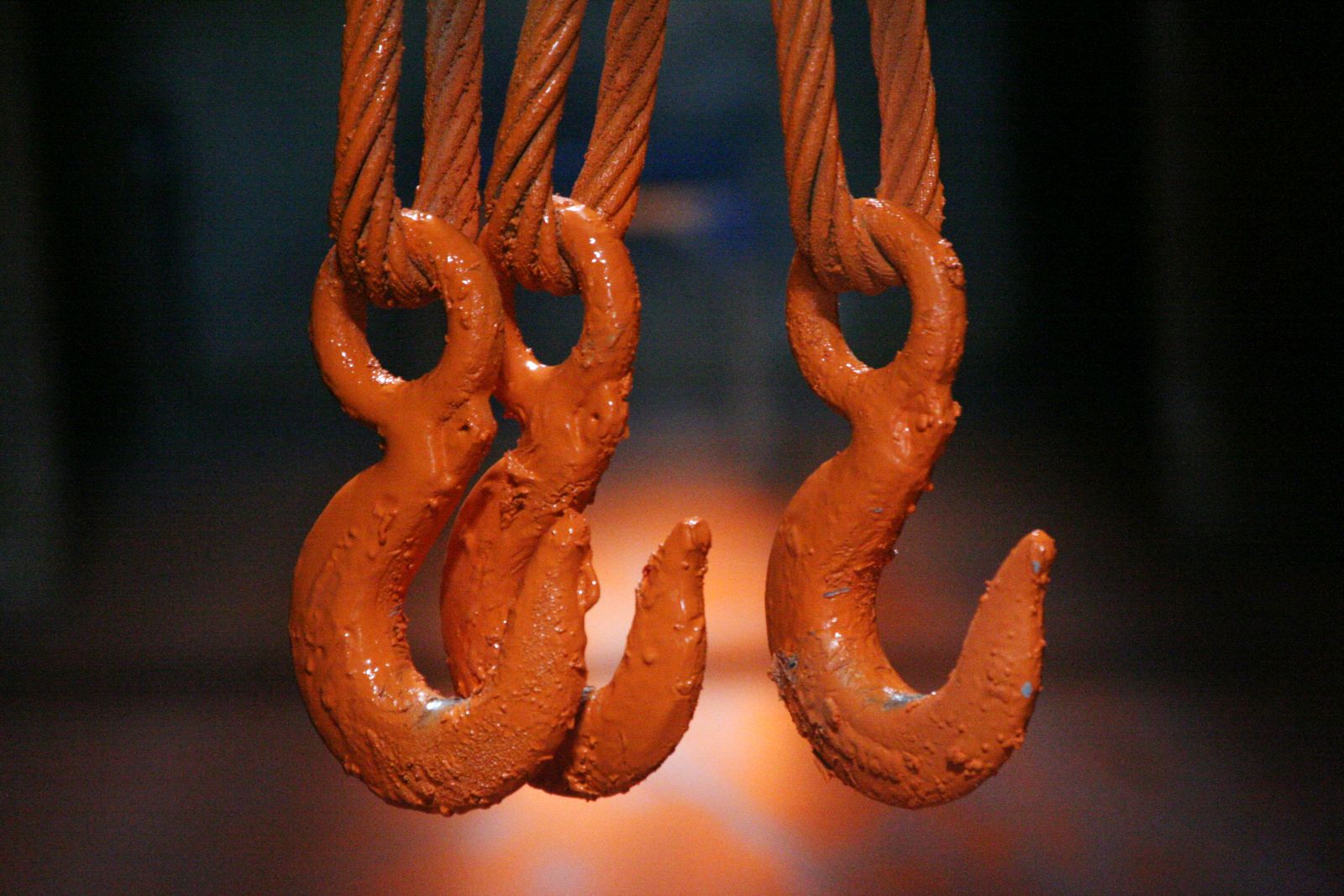
Every load that hangs from a crane hook swings on the border of two worlds: the skill of the lifting operation on one side, the patience of gravity on the other. Crane hook liability insurance is an industry-specific policy that carries the financial liability for damage to that load — during lifting, carrying, lowering and erection. As a brokerage that played a pioneering role in developing this product for the Turkish crane industry, we lay the whole subject out in this guide: what it is, why standard policies fall short, how to buy it and what to watch for.
What is crane hook liability insurance?
One-sentence definition: it covers the liability arising from sudden and unforeseen damage to the load on the hook during a lifting operation. "On the hook" is meant physically: the cover lives in the window from the moment the load is attached to the moment it is safely set down and released.
The covered operations are the industry's daily work:
- Lifting, carrying and lowering
- Erection and dismantling (steel structures, machinery placement, precast assembly)
- Loading, unloading and transfer
The product was born from the industry's real predicament: the lifted load usually does not belong to the crane's owner — it is the customer's machine, the contractor's steelwork, the factory's press line. When the load is damaged, the invoice comes back to the lifting contractor. Hook liability is the insurance of that invoice.
In Turkey, our brokerage has a particular place in this product's story: we introduced it at industry association meetings — the Istanbul Heavy Transport and Lifting Association among them — and travelled from Istanbul to Kayseri and Mersin to hear the need directly from crane operators. The examples in this guide are distilled from those field conversations.
Why standard policies are not enough
The most expensively learned lesson in the crane business is this: none of the usual policies covers the load on the hook. Why?
- Third party liability covers damage to the surroundings; the load on the hook counts as "property in the insured's care, custody or control" and sits among the typical exclusions.
- Machinery breakdown protects the crane itself; it has no interest in what hangs from it.
- The load owner's own cargo or property policy, where it exists, does not save you either: after paying its insured, that insurer exercises its recourse rights and comes back to the lifting contractor. The load owner being insured merely changes your creditor.
The result: at the very heart of the lifting operation — the tip of the hook — standard insurance architecture has a blind spot. Hook liability insurance was designed to close it. Our long-standing slogan in the industry — "Don't be afraid, you're insured!" — describes precisely this closure: the cover holds even while the load is in the air.
How the gap looks in practice, told as a claims flow: the load drops → the owner recovers from its own insurer → that insurer exercises recourse against the crane operator → the operator's third party policy points to the on-hook exclusion → the file lands on the operator's desk as an uninsured claim. With a hook policy in place, the same flow resolves between insurers at step three, and the operator carries on working. The only difference between the two endings is one policy.
Who needs it? Covered equipment
Every business that lifts, lowers or erects loads is a natural candidate. The insurable equipment family is broad:
- Mobile cranes
- Truck-mounted (loader) cranes
- Tower cranes
- Forklifts
- Telescopic boom lifts
- Mobile aerial platforms
- Scissor lifts
The list illustrates a principle rather than a boundary: the cover looks not at the machine's brand but at the act of lifting itself. The pallet on a forklift's forks and the formwork on a tower crane's hook are subjects of the same question: whose responsibility is this load right now? If the answer is "ours", the policy is for you.
For mixed fleets, a practical note: gathering different equipment types — crane, platform, forklift — under one policy improves both administration and price. Separate per-type policies mean duplicated premium and blurred boundary definitions; one roof, one language, one renewal date is always cleaner.
One group should pay special attention: operators renting machines out with their own operators. When the operator is yours, operational control — and load responsibility — largely stays with you. The rental contract's "hirer is responsible for the load" clause is a weaker shield in court than it looks; as long as your operator executes the lift plan, the liability debate calls on you.
What does it cover?
The cover responds to sudden and unforeseen damage to the load during the lifting operation. The most frequent event types in the field:
- Rope and sling failure: the load falling after the sudden failure of a wire rope, chain or textile sling.
- Boom-related events: uncontrolled movement or dropping of the load following sudden boom damage.
- Slew ring failure: a sudden failure in the crane's slewing system reflected onto the load.
- Operator error: a wrong manoeuvre, a miscalculation, a sudden load shift — the industry's most human and most frequent cause of loss.
- Rigging and attachment defects: the sudden failure of a lifting attachment, shackle or connection point.
The common denominator is the familiar pair of words: sudden and unforeseen. Damage born of the load's own internal defect — a badly packed machine, rotten timber — falls outside that definition, as we will see in the exclusions. The temporal boundary is equally clear: protection begins when the load is attached to the hook and ends when it is safely set down and released. Every sudden event inside that window belongs to this policy; everything outside it belongs to the neighbouring policies.
Four loss examples from the field
Example 1 — Press line installation: a 40-tonne press being set into a factory slips suddenly in its sling eye and strikes the floor. The damage to the press body and its rail system is paid under hook liability. The broken floor slab in the same accident belongs to third party liability — two files, two policies, one accident.
Example 2 — Steel erection: a warehouse main beam falls during erection when a lifting attachment fails; the beam is bent beyond use and must be refabricated. The beam's value and refabrication cost are covered. The contractor's delay penalty, however, is consequential loss — outside standard cover. Explaining that distinction to your customer in advance protects the relationship on claim day.
Example 3 — Transformer placement: in a tandem lift at a power plant, one crane's sudden boom deflection unbalances the transformer, which takes an impact to its housing. High-value, sensitive loads demand specialist survey terms in the policy — and tandem (two-crane) operations must be expressly defined, because standard wordings assume a single crane.
Example 4 — Forklift moving a CNC machine: a machining centre being repositioned inside a workshop slides off the forks and topples. The damage to its body and spindle belongs to the lifting cover. The example carries two reminders: the cover is not crane-only — every lifting machine creates the same responsibility — and short in-house moves produce real losses. The claim story that begins "we only had to move it two metres" is far more common than the industry admits.
What is not covered?
- The load's own defect: damage arising from bad packing, internal decay or a load heavier than declared.
- Capacity exceedance: knowingly lifting beyond the load chart — the subject of negligence, not cover.
- Uncertified operators: operations run by unqualified or uncertified operators put the policy in question.
- Consequential losses: delay penalties, lost work, stopped production — outside standard cover.
- Wilful misconduct: the universal exclusion of every policy.
- Road transport of the load: once the load leaves the hook and is secured to a vehicle, its journey belongs to cargo insurance.
Most of the exclusions mirror good operating practice: for the operator who respects the load chart, works with certified operators and rigs the load correctly, the exclusions stay on paper.
The liability triangle: hook + surroundings + crew
The hook policy is not an island; full protection of a lifting operation comes from the harmony of three covers:
- Hook liability → damage to the load on the hook
- Third party liability → damage to the surroundings: buildings, vehicles, people
- Employer's liability → your own crew's occupational accidents
A single dropped load can open all three files at once: the load is damaged (hook), the car it lands on is crushed (third party), the rigger is injured (employer's). Designing the three policies so their limits and exclusions interlock — each picking up where the other leaves off — is the real craft of your broker. For the crane itself, machinery breakdown completes the fourth corner.
The lift plan and your policy
The backbone of a professional lift is the lift plan: load weight and centre of gravity, crane position and load chart, sling angles, ground conditions, weather limits. That plan is a foundation document not only of safety but of insurance — for three reasons:
- It is the first document requested in a claim. In a planned operation, the loss reads as "sudden and unforeseen"; in an unplanned one, the "foreseeable result" debate opens. The same damage meets two different fates.
- It is the antidote to the capacity exclusion. When compliance with the load chart is documented in the plan, the most frequently invoked exclusion goes quiet.
- Planned operators are insured more cheaply. A business that can show its lift-planning procedure, engineering support and equipment inspection records moves into a different risk class in the insurer's eyes.
In short: the lift plan is not paperwork in a drawer; it is your policy's twin in the field. Archiving a copy of the plan for major lifts alongside your claims documentation will one day save you both time and money.
If you own the load: the view from the other side
Read the guide once more from the other side of the table: if you are a factory shipping its machine or a contractor having steel erected, the insurance question belongs at the top of your crane-hire checklist. Three questions to ask:
- "Do you carry hook liability, and what is the limit?" If there is no cover, or the limit sits below your load's value, the uncovered remainder ends up in litigation.
- "May I see the certificate?" The difference between a verbal "we're insured" and a certificate that is in force and adequate appears on claim day. Corporate principals increasingly write hook liability limits into their tender specifications — rightly so.
- "Do you work to certified operators and lift plans?" The validity of the insurance depends on operational discipline; the insurance of an undisciplined operation exists only on paper.
The load owner can also protect its own side: buying its own cargo/erection cover for high-value loads removes one-sided dependence on the crane firm's policy. The healthiest project is the one where both sides are insured — on claim day, nobody is hostage to anyone's ability to pay.
How to buy the policy, step by step
- Prepare the information: the machine schedule (type, make, model, capacity, year), operator numbers and certificates, the annual operations profile (what loads, which industries, which regions) and any existing policies.
- Request a quotation: approach your broker with that file. A good broker asks further questions at this stage — one who doesn't is pricing your risk without understanding it.
- Risk assessment: the broker presents your file to insurers who genuinely know the product and negotiates the terms. Limits, deductibles and exclusions take shape here.
- Compare quotations: read premium together with limits, deductibles, exclusions and claims service. The cheapest quotation is usually the narrowest one.
- Bind and maintain: the chosen terms become the policy, updated by endorsement as the fleet changes. A policy is a living document, not a drawer item.
The most critical input of the whole process is honesty at step one: understating your operations profile shaves a little premium and puts the entire file at risk on claim day. Insurance runs on mutual good faith — a principle remembered most vividly at the claims table.
On timing: with a tidy file, first quotations usually arrive within a few working days, and the whole process — negotiation to binding — completes in about a week. For machines that must start work urgently, same-day provisional cover can be arranged, provided the machine and operation details are at hand.
How limits are set
In hook liability the limit answers a single question: what is the most valuable load you lift? If your routine work is machines around one million but a few times a year you set down an eight-million transformer, the limit follows the peak, not the routine — losses read the calendar, not the statistics.
Two structures are common: a per-occurrence limit (maximum per loss) and an annual aggregate (maximum over the policy period). Clarify how the two interact, how the deductible applies, and how special operations such as tandem lifts feed into the limits. For frequent high-value work, adding a declaration mechanism — notifying the insurer before the big lift and adjusting cover for that job — optimises premium and prevents surprises. A worked example: a business whose routine sits at one million carries a policy priced for that band; for the quarterly eight-million transformer it either carries the high limit all year, overpaying on routine work, or declares the big lift in advance and pays a small additional premium for that operation alone. The second road is cheaper and turns the insurer relationship from an annual surprise into a planned partnership. Its one condition is discipline: the big lift someone forgot to declare flies on the standard limit.
What drives the premium?
- Fleet capacity and age: as lifting capacity grows, so does the value of what can hang from the hook.
- Operations profile: routine pallet work and precision machinery erection do not price alike; your customer industries are part of the price.
- Chosen limits and deductible: the per-occurrence limit and deductible balance is the premium's main column.
- Operator quality: certificates, experience and training records — the soft but real measure of the risk.
- Claims history: a clean record is negotiating power; after losses, documented improvements steady the price.
The number of insurers in Turkey who truly know this product is limited; taking the right file to the right insurer decides not only the price but the claims-day experience. Behind the fact that more than 210 crane companies work with us stands exactly this matchmaking craft.
And the invisible cost: an operator without hook cover is not working uninsured — it is self-insuring, carrying the load's full value on its own balance sheet through every lift. Put the annual premium next to that invisible exposure and the question changes from "what does insurance cost?" to "what does carrying this risk myself cost?" The pattern we have watched for years is unambiguous: the premium is a small fraction of a single mid-sized loss.
Rigging care: the quiet partner of the cover
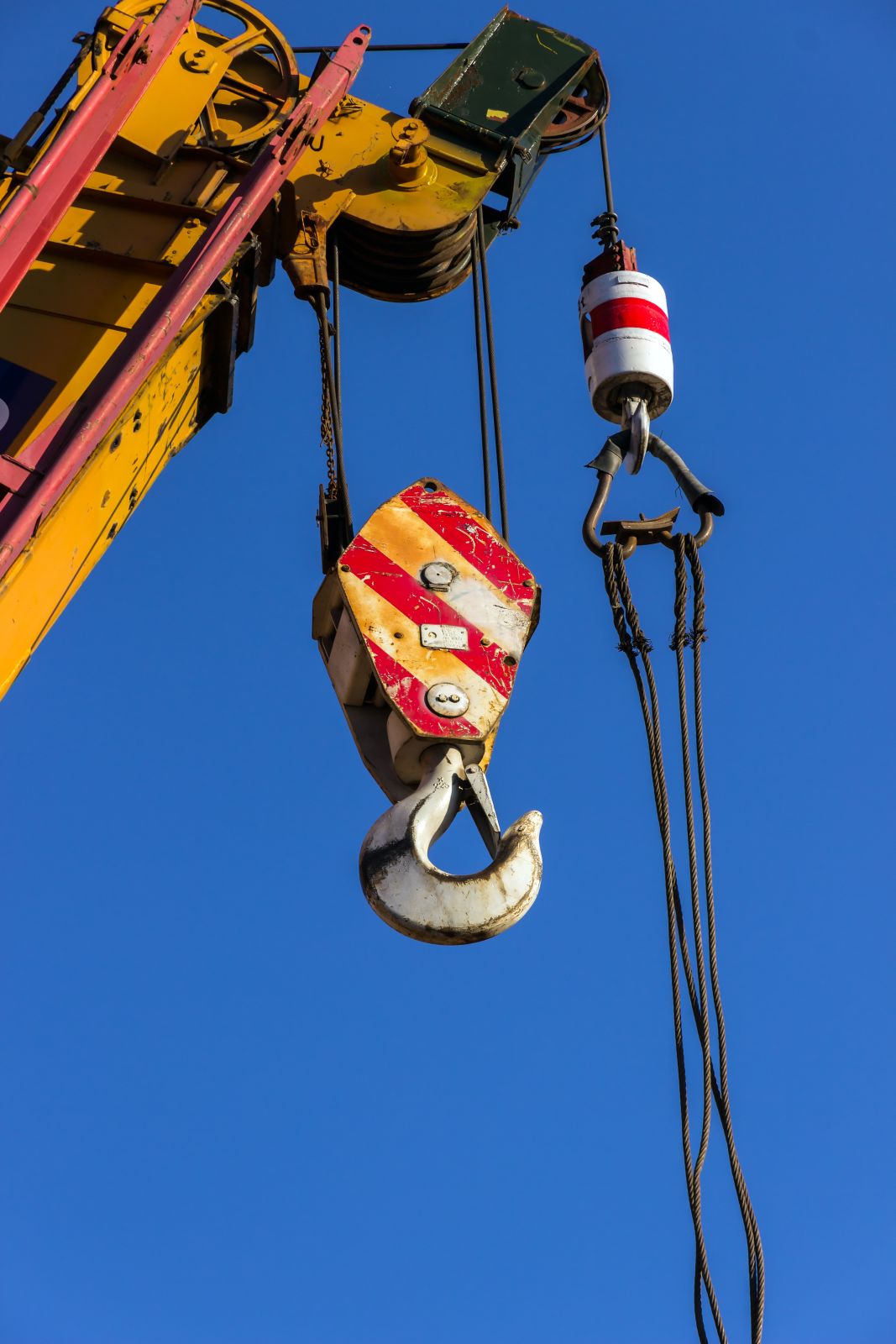
- Document periodic inspections: lifting tackle inspections are a legal requirement, and their reports are the claim file's most-requested document.
- Make pre-use visual checks a habit: two minutes of looking in the field prevents two months of arguing in the file.
- Match the rigging to the load: choosing slings for the weight and the attachment method is part of the lift plan; "making do with what's on the truck" is the exclusion clauses' best customer.
- Retire expired tackle: a sling that should be scrapped but stays on the shelf will one day find its way onto the hook.
Translated into insurance: where rigging records are tidy, the "sudden and unforeseen" finding comes easily, exclusion debates close, and the indemnity accelerates.
What to do when a load is damaged
- Safety and the scene: secure the site; photograph the load, the crane and the rigging before anything is moved.
- Keep the rigging: the failed rope, sling or attachment is the primary evidence of cause — never discard it.
- Report and witnesses: have an incident report drawn up; list witnesses and any camera footage.
- Manage the load owner correctly: inform them, but avoid statements that read as admissions of liability; the address of compensation is the policy.
- Notify immediately: approach your insurer with the full file; repairs to the load should not begin before the surveyor is appointed.
Hook claims have a peculiar difficulty: the process runs on two fronts — the indemnity file with the insurer, and the ongoing commercial relationship with the load's owner, who is usually also your customer. Manage the two separately: the insurance file with documents and calm, the customer relationship with transparent updates. The worst combination is making early promises to the customer while the file is still uncertain — a broken promise does more damage than the loss itself. If Fidancılar is your broker, your first phone call comes to us, and we run the process from surveyor coordination to the negotiation with the load owner. A fast, knowledgeable counterpart in a claim is this policy's invisible but most valuable benefit.
The 5 most common mistakes
- "My third party policy covers the load too." It does not. Running site operations without reading the on-hook exclusion is the industry's most expensive misconception.
- Choosing the limit by the routine load. The most valuable load you lift once a year is the true measure of your limit.
- Trusting the rental contract. The "hirer is responsible" clause does not deliver the protection you expect while your own operator drives the crane.
- Not declaring tandem and special operations. Two-crane lifts, work over water and other non-standard jobs are debate material unless written into the policy.
- Not documenting rigging inspections. Periodic tackle records are the most-requested document of the claim file.
A checklist before you sign
- What are the per-occurrence and annual aggregate limits? Do they cover your most valuable load?
- Which operations are covered — are erection/dismantling and loading/unloading written expressly?
- Are tandem lifts and special operations defined?
- How large is the deductible and how is it applied?
- What are the exclusions? How are operator certification and capacity conditions worded?
- Do the boundaries with your third party, employer's and machinery policies interlock?
- Does the claims service actually know this industry?
Every question on this list is the lesson of a real dispute that happened in the field; none is theoretical. Five minutes spent asking them at the quotation table saves weeks at the claims table — and the whole of this guide compresses into one sentence: know your policy on signing day, not on claim day.
Crane hook liability is not merely a product for us; it is the specialty on which we built our name as the leading insurer of Turkey's crane industry. Send your fleet and operations profile through our quote form and let us build the policy around the loads you actually lift. For a product summary, see our crane hook liability insurance page — and for the other corners of the risk picture, our third party liability guide and machinery breakdown guide.